The Basement Doctor of Cincinnati Before & After Photos
Click on a photo to enlarge.
Crawl Space Vapor Barrier Installation in Cincinnati, OH


In order to keep this crawl space safe from moisture, we placed down our CleanSpace crawl space liner, which will block out moisture from the earth. This liner went on top of our drainage matting, which can not be seen from the picture. The drainage matting helps drain water to the sump and also softens the area. We tape the liner at all seams with waterproof tape, and we button the liner up the walls of the crawl space. We also installed SilverGlo insulation along the walls, which are made of an inorganic material and are unable to grow mold.
Poolside Concrete Repair in Cincinnati, Ohio


These pool area slabs in Cincinnati, OH, had settled unevenly, resulting in a large lip to form just past the handrail in the before photo. In order to fix this tripping hazard, we had to inject PolyLevel foam underneath the slabs on this side of the pool to level everything out. We commonly see poolsides have troubling concrete issues because of soil washout. When water gets underneath the slabs it can cause the soil to get muddied, allowing the concrete to settle. A great aspect about PolyLevel is, unlike mudjacking slurry, PolyLevel is a closed-cell polyurethane foam that does not absorb water, and once it expands and cures, it maintains its shape and volume. The result was a happy homeowner who was relieved there are no longer any tripping hazards near their pool.
Concrete Patio Leveling in Cincinnati, OH


This back patio in Cincinnati, OH, was all bent out of shape due to settling. Even worse, the way the pads settled down by sloping towards the home meant all the rain water channeled straight down towards the foundation of the home. To fix the issue, we leveled out each pad on the patio by using our PolyLevel foam jacking method. After leveling the patio back out, we then sealed all the joints with our NexusPro sealant to make sure rainwater can't infiltrate the dirt underneath the patio any longer.
Concrete Pad Lifting in Cincinnati, OH


We lifted each individual concrete pad for this back patio in Cincinnati, OH, by using our PolyLevel foam jacking method. Our foam method is much more cleaner and effective than mudjacking alternatives, which homeowners enjoy. All that is required for us to inject the soil with our foam is drilling tiny pea-sized holes in the concrete to create room for our hose. Mudjacking on the other hand requires much larger drill bits and can leave the yard a muddy mess.
Basement Crack Repair in Cincinnati, OH
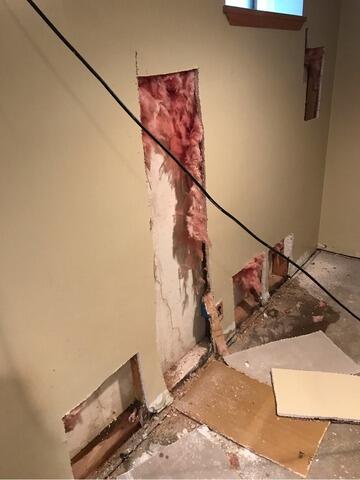
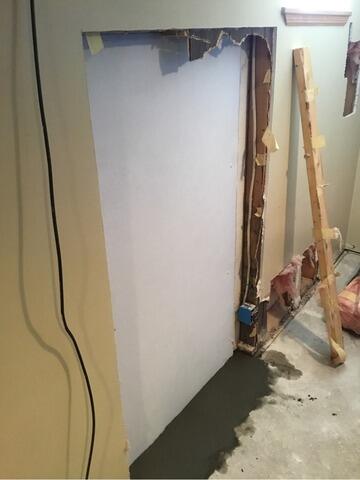
This crack repair project in this Cincinnati, OH, basement helped seal up a leaky spot behind the homeowner's drywall. We did have to cut out the drywall on the initial inspection to locate the spot of the crack, right above where the baseboard was wet. Our crack repair system involves chipping away at the crack, digging a hole in the floor of the basement, filling the crack with the first layer of epoxy, lining the epoxy with a foam strip (and wiring the foam strip into the hole in the floor), covering the foam strip with another layer of flexible epoxy, sealing the system with a white wall panel, and then sealing the hole with a gravel backfill and a concrete layer at the top to reseal the floor back together.
our service area
We serve the following areas
- Burlington
- Covington
- Erlanger
- Florence
- Ft Mitchell
- Glencoe
- Hebron
- Independence
- Morning View
- Petersburg
- Sparta
- Union
- Verona
- Walton
- Warsaw
- Addyston
- Ansonia
- Arcanum
- Camden
- Cleves
- College Corner
- Eaton
- Eldorado
- Fairfield
- Greenville
- Harrison
- Hollansburg
- Lewisburg
- New Madison
- New Paris
- New Weston
- North Bend
- Okeana
- Oxford
- Rossburg
- Somerville
- Union City
- West Alexandria
- West Elkton
- West Manchester