Diagnosing & Repairing a Street Creep Problem in Covington, KY
Challenge
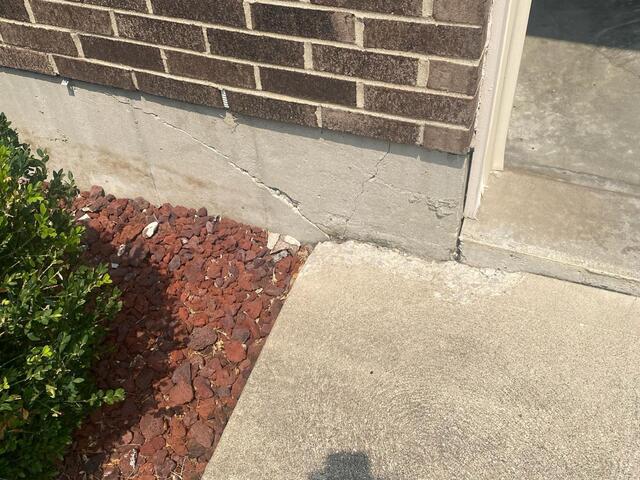
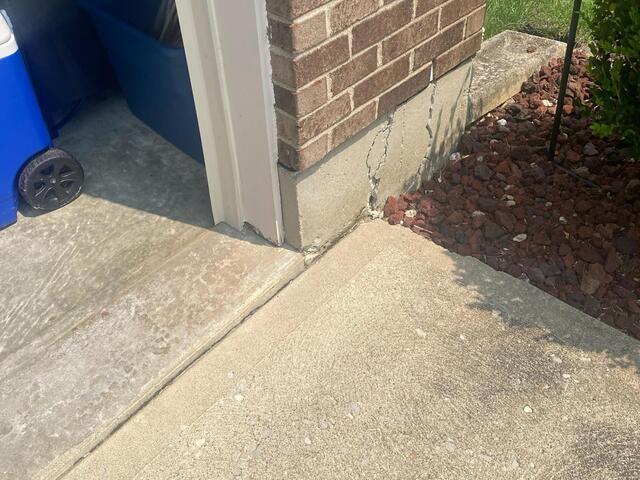
A homeowner in Covington, KY, contacted us after noticing that the back wall of their garage, opposite the garage door opening, was beginning to lean inward. We were the third contractor to inspect the problem, and during our initial inspection, our Representative, Steve, identified an uncommon issue known as street creep. When Steve asked whether either of the other contractors had mentioned street creep, the homeowner said they had not.
Steve explained that street creep occurs when a street expands during warmer weather and exerts lateral pressure against a driveway. When a driveway is tightly connected to the garage slab without a proper isolation joint, that pressure can transfer from the street into the driveway and then into the garage slab and foundation. In this case, the force was ultimately pushing against the back wall of the garage, causing the top of the wall to shift inward and creating the cracks the homeowner had noticed outside.
Street creep is relatively uncommon because many properties have safeguards such as expansion or isolation joints that help prevent this type of pressure from being transferred into the home's foundation. In fact, we typically perform only about one street creep repair per year. However, when the right conditions are present, street creep can cause significant movement, which is why properly identifying the source of the problem is an important first step in making a lasting repair.
Solution
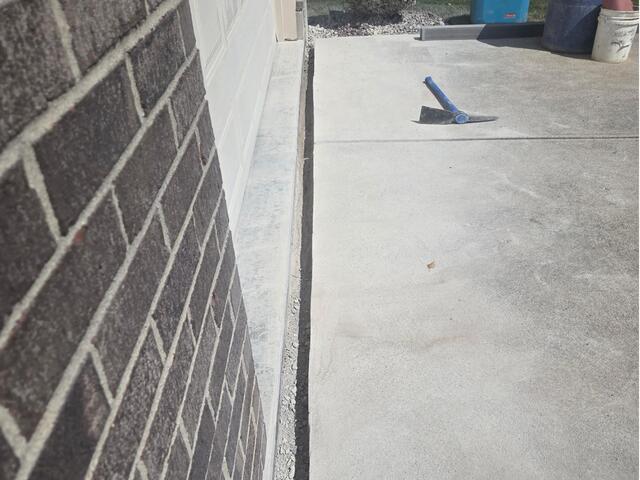
To stabilize the garage wall and address the underlying cause of the movement, we first needed to stop street creep from continuing to transfer pressure into the garage slab. Before installing our steel PowerBrace system, we created an isolation joint between the driveway and the garage floor slab. The homeowner told us that neither of the other contractors they contacted had included this step in their proposals.
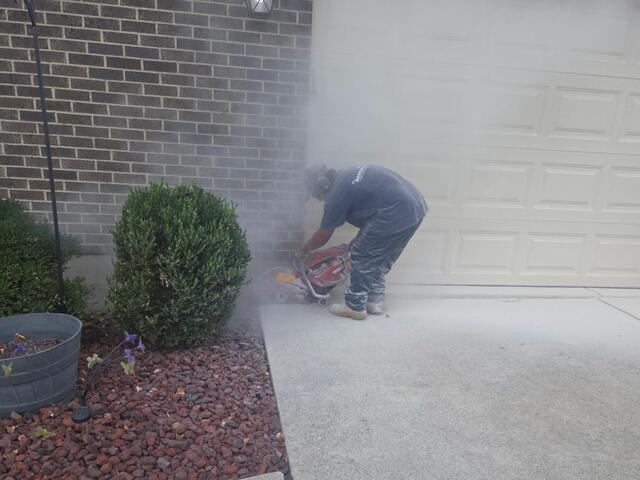
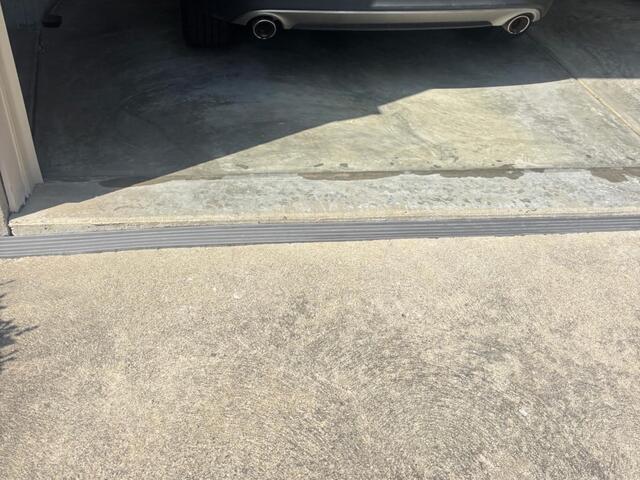
To create the isolation joint, our crew cut a strip of concrete across the driveway directly in front of the garage door. We then installed our Compression Guard product into the opening. Compression Guard is an accordion-like rubber material that remains in place while providing the flexibility needed to accommodate concrete expansion and contraction. This gives the driveway room to move without transferring the same lateral pressure directly into the garage slab and foundation.
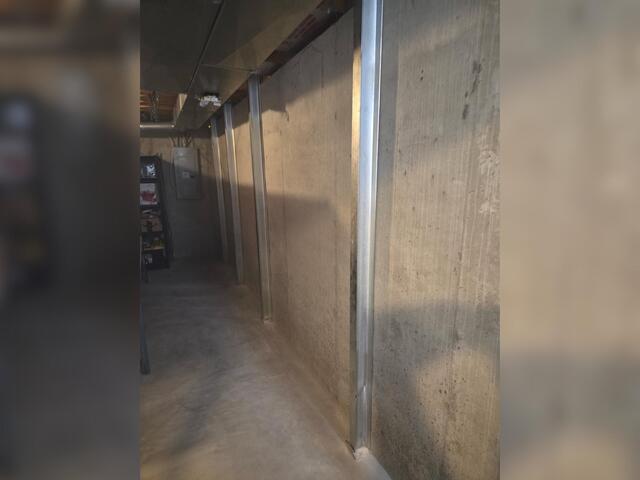
Once the source of the pressure had been addressed, we installed our steel PowerBrace system along the backside wall of the garage to stabilize it and prevent further inward movement. Depending on how the wall responds after the street creep pressure has been relieved, the PowerBrace system may also allow us to gradually tighten and straighten the wall over time. If the homeowner chooses to pursue additional tightening, we can return when conditions are favorable. Tightening is best performed during dry conditions, when the lateral pressure from the surrounding soil is typically at a minimum.
By addressing both the cause of the movement and the movement itself, we were able to provide the homeowner with a comprehensive repair rather than simply bracing the wall and leaving the underlying street creep issue unresolved.