Saving a Shearing Wall from Total Collapse in Cincinnati, OH
Challenge
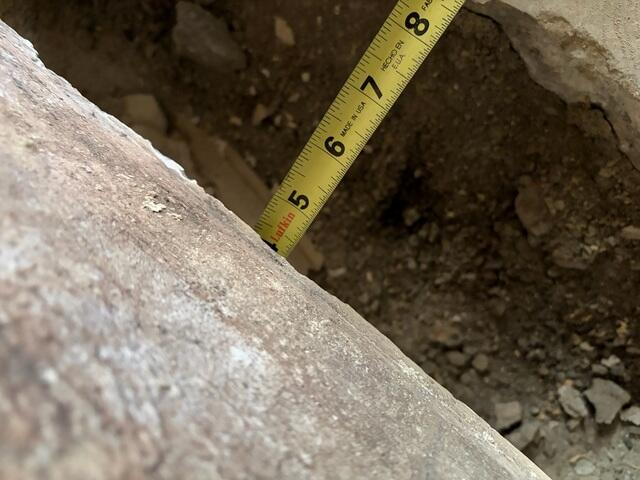
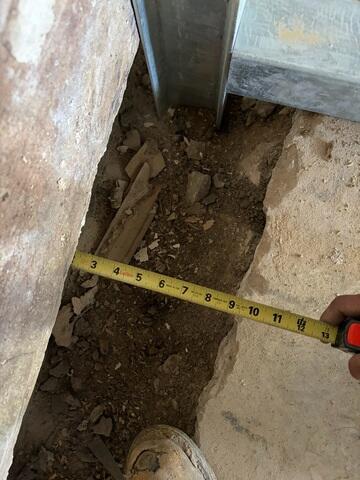
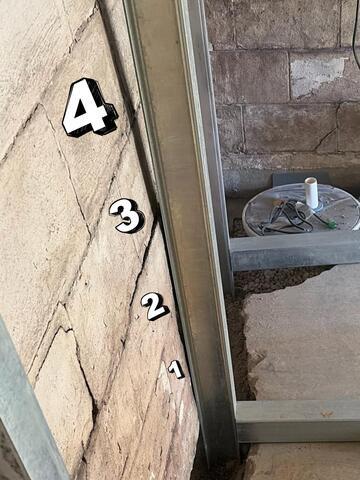
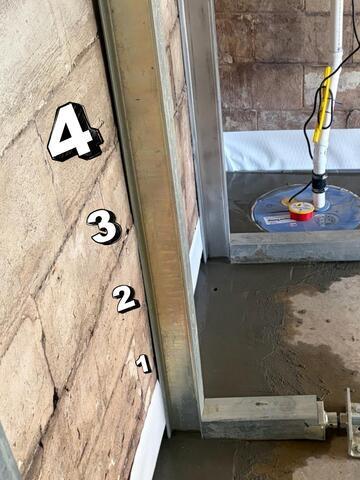
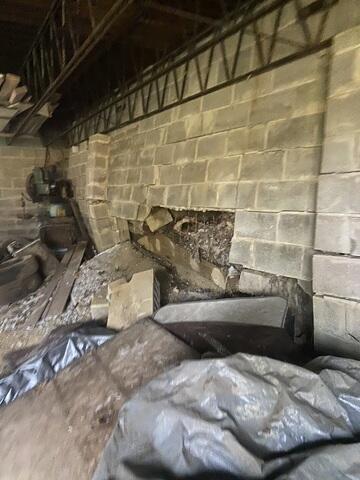
In this Cincinnati, Ohio basement, one foundation wall had reached an advanced stage of failure known as bottom shearing. The wall had shifted nearly four inches inward near the center, putting it dangerously close to complete collapse. The homeowner first noticed stair-step cracking along the mortar joints - stemming from all four corners of the wall, but what appeared to be a small issue quickly developed into a serious structural problem.
Shearing occurs when the bottom course of a block wall is held in place behind the basement floor slab. Because that bottom row of block can’t move, all the blocks above it begin to slide over top of the bottom block under pressure. Over time, the soil outside the foundation can push inward - especially when it becomes saturated and heavy. As this pressure builds, it forces the wall to shear or “break” just above the slab line, causing the upper portion of the wall to tilt inward while the bottom remains locked in place.
This type of failure typically begins with small horizontal cracks or minor inward movement, but once the shearing starts, the wall’s stability rapidly deteriorates. In this case, the displacement was so severe that the wall was on the verge of losing structural support entirely. Immediate stabilization was the only way to prevent a total wall collapse and protect the rest of the home.
For a better explanation on wall shearing and how it occurs, check out this video on our website: Click here!
For a better explanation on the stages of block wall failure, check out this video on our website: Click here!
Solution
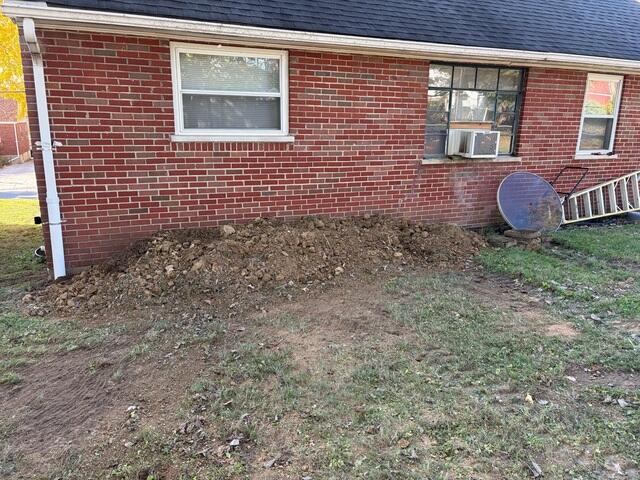
Because the wall had sheared nearly four inches inward, our inspector recommended an immediate straightening approach rather than a gradual correction. In this case, the damage was too advanced to safely realign the wall without first relieving the exterior soil pressure. Our crew began by excavating along the outside of the affected foundation wall, allowing us to safely access and reduce the load pressing against it.
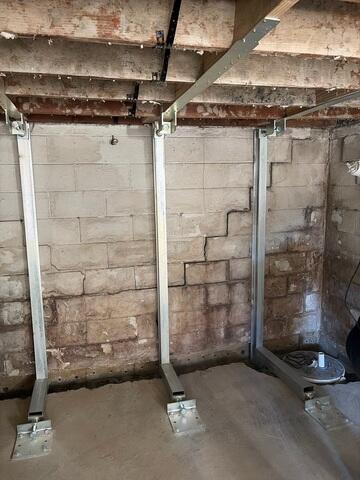
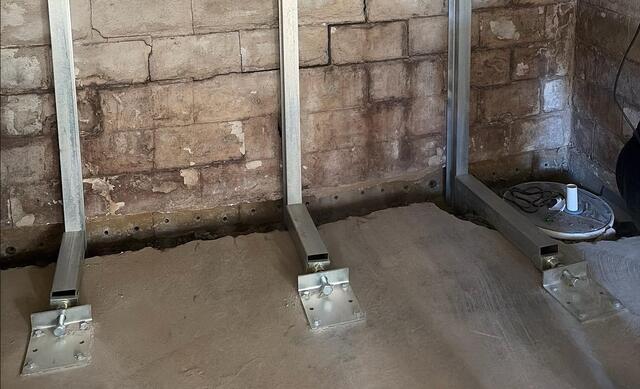
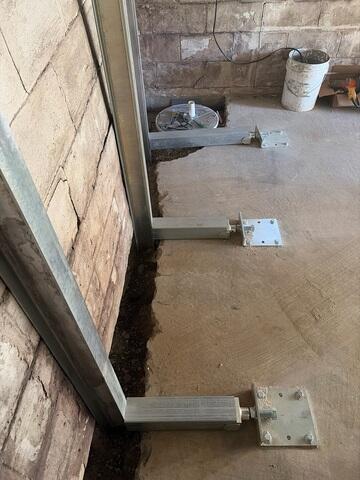
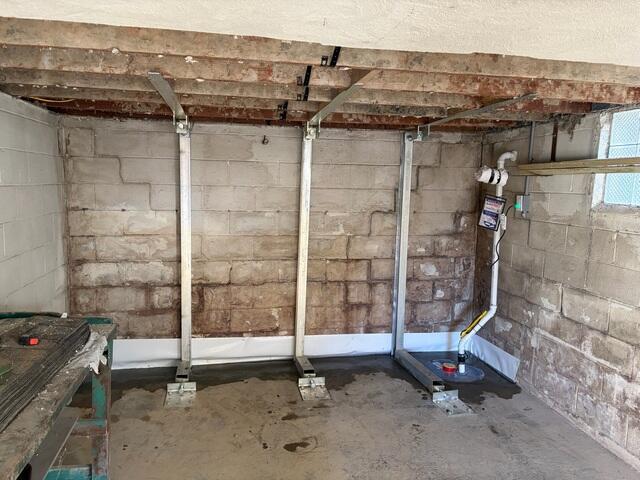
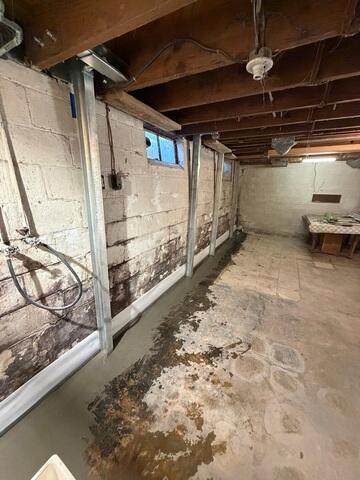
Once the soil was removed, we installed three PowerBraces along the inside of the basement. These steel I-beams were anchored from the floor to the floor joists above, giving the structure rigid internal support while the wall was pushed back into place. By combining excavation with our PowerBrace system, we were able to not only straighten the wall vertically, but also push it back horizontally onto the footing—restoring its alignment and structural strength.
To counteract the effects of the severe shearing, we also installed floor braces at the base of the wall for additional pushback support. The homeowner didn’t mind the low-profile floor braces and planned to simply position their workbench over them once the work was complete.
After the wall was stabilized, we applied a TVB coating to the exterior face of the wall to protect it from moisture intrusion and prevent further degradation. A waterproofing system was also installed along the inside of this wall to keep the basement dry and reduce future hydrostatic pressure.
By the end of the project, the once-failing wall was straight, structurally secure, and well-protected—saving it from complete collapse and extending the life of the foundation for decades to come.
Project Summary
Foreman: Clem
Engineer: Walt