A homeowner in Lawrenceburg, Indiana, noticed uneven and cracked sections forming in their finished basement floor. Over time, the concrete slab had settled due to unstable soil conditions beneath the home. Because the basement was finished, the repair required a precise and minimally invasive approach that wouldn’t damage walls, trim, or flooring. Before work began, the homeowners cleared all furniture and personal items from the basement so the crew could safely access each area of settlement.
Solution
Our foundation repair team installed 43 slab piers beneath the concrete floor to permanently stabilize and lift the settled sections. Slab piers are a deep-foundation support system designed specifically for concrete floor slabs that have settled or sunk. Each pier is driven through small cored holes in the slab until it reaches competent, load-bearing soil or bedrock. Brackets are then attached beneath the slab, and hydraulic equipment is used to gently lift the floor back toward its original position. Once the proper elevation is achieved, the piers are locked in place to permanently transfer the slab’s weight to stable soil.
After lifting the slab, we injected roughly 735 pounds of PolyLevel foam to fill any remaining voids beneath the floor. This step ensures that the concrete is fully supported and prevents future movement. PolyLevel expands as it cures, which helps it fill gaps tightly while adding additional stability around each pier location.
Together, the slab piers and PolyLevel void fill provided a lasting solution to the foundation settlement problem. The project was completed efficiently, with minimal disruption to the finished space, and restored both the safety and appearance of the basement floor.
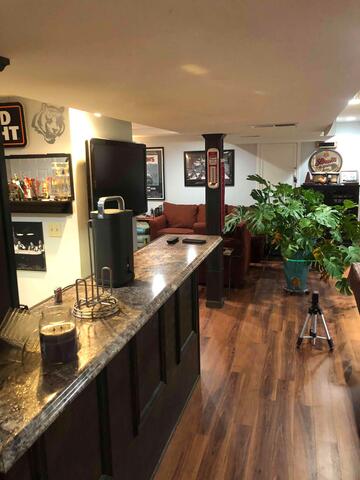
This finished basement had beautiful cabinetry, built-in storage, and finished flooring, but the sinking slab beneath threatened to create cracks, uneven surfaces, and potential damage if left unaddressed.
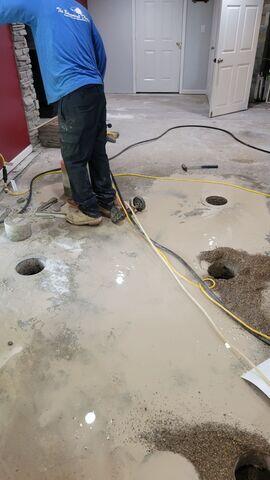
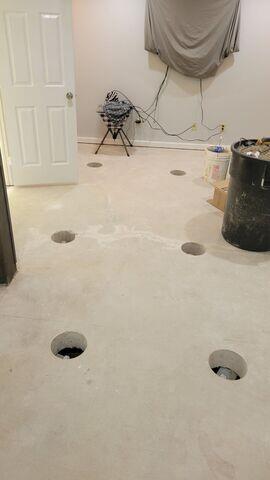
Before installing the slab piers, the homeowners cleared the paneled flooring and moved out some furniture to give our team full access. For this project, we drilled 43 precision holes, strategically placed to provide consistent support across the entire slab and ensure a stable, level floor once the piers were in place.
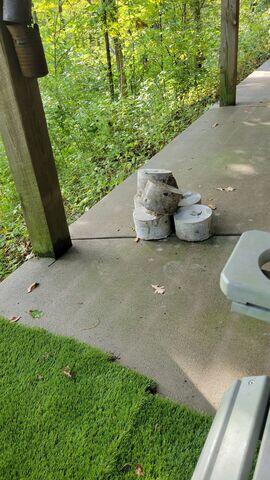
In this photo, you can see the concrete circles that were cut from the basement slab to make way for the slab piers. Each piece measured about 8 to 9 inches thick, reflecting the solid construction of the original floor. The image also gives a glimpse of the hillside surrounding the basement, illustrating how the slope and soil conditions contributed to the uneven settling that required repair.
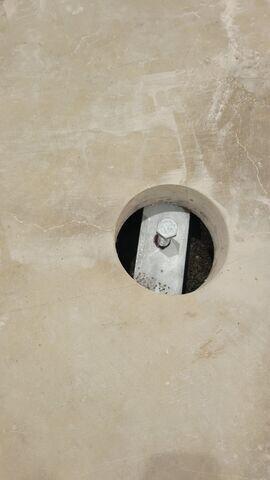
This photo provides a close-up look at one of the pier brackets used in the project. The bracket is attached directly beneath the slab and serves as the point where the hydraulic system lifts the concrete back to its proper level. Once the slab is raised, the bracket holds it securely in place, transferring the weight of the floor down to the stable soil or bedrock below.
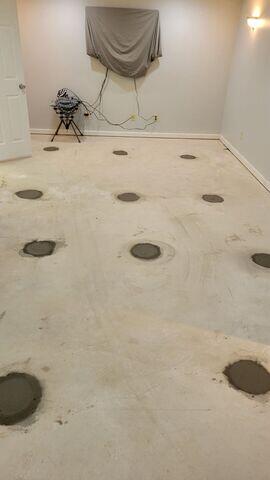
This photo shows a room with all the slab piers installed.
This photo shows the same room with the piers concealed with a fresh concrete backfill.
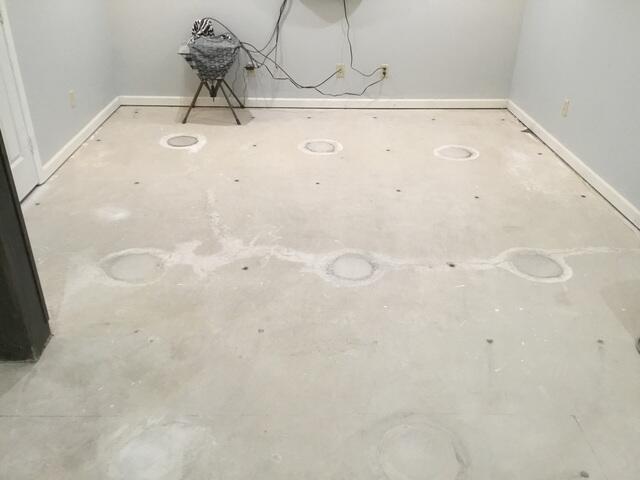
This photo shows the same room after our PolyLevel crew filled the voids beneath the slab. After the slab piers lifted and stabilized the floor, PolyLevel was injected into any remaining gaps beneath the concrete. The foam expands to fill these voids, creating additional support around each pier and across the entire slab.